Introduction: A Small Moment, A Big Choice
You pause at a duty-free shelf after a long flight, eyes tired but curious. On the counter, a round perfume bottle catches the light and your eye. Market surveys say over half of shoppers judge first by bottle shape before scent, and conversion rises when glass feels balanced in hand—small detail, big impact (we all do this). So, why do some round bottles feel premium while others look almost the same but disappoint? Is it only design, or also the way they are made, packed, and scaled? The answer is more layered than people think—funny how that works, right?
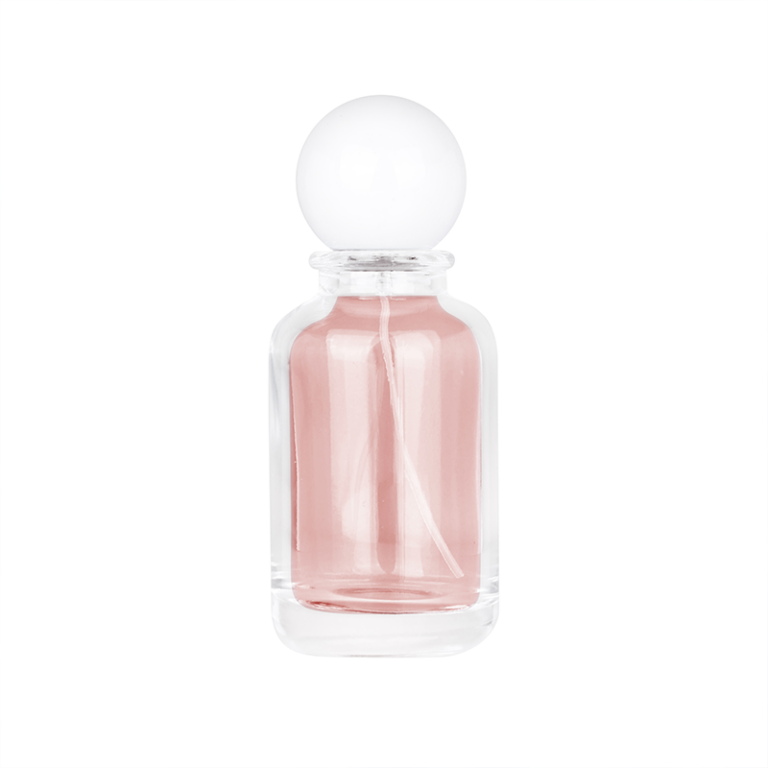
Today we compare the hidden trade-offs behind those curves, across factories and finishes. We ask a practical question: what changes when new control methods meet old glass craft? Let us move from the shelf to the line, and see what explains the difference.

The Quiet Flaws Behind a Perfect Circle
When buyers search for round perfume bottle manufacturers, they often see the same photos, the same CAD, the same promise. But the deeper layer is not the drawing; it is the variance. Round bottles amplify any small drift in neck finish and wall thickness. A 0.2 mm offset can tilt the spray, a tiny ovalization can make the crimp pump creak, and a micro-chip at the heel can fail drop testing. In the annealing lehr, if the cooling profile is uneven, stress rings remain and later cause hairline cracks. Look, it’s simpler than you think: most returns trace to a few points—dimensional tolerance at the neck, coating adhesion after silk-screening, and the real spray rate after assembly.
Why do tolerances drift?
Technically, the cullet ratio changes melt behavior, mold wear shifts cavity geometry, and SPC charts are not always live on the floor. If pushers and dead-plates are not set right, glass distribution goes heavy on one quadrant. Then a good bottle looks “off” under a gauge but passes a quick visual. Add transport shock, and weak trays imprint rings on lacquer. Even labeling can slip if the datum band is not consistent. The flaw is not only process; it is the feedback loop. Without fast checks, defects batch up, and rework scrapes coatings or marks the shoulder. That is why samples can sing, yet mass orders hum differently.
What’s Next: Smarter Lines, Clearer Choices
To move past these pain points, factories are wiring inspection to the edge. A modern round perfume bottle supplier can pair vision stations with edge computing nodes right after the forming machine—before the annealing lehr locks stress in. The principle is simple but sharp: detect ovality, finish height, and push-up in real time, then auto-adjust gob weight or mold temperature. Power converters stabilize furnace electrodes so temperature swings do not ripple into thickness bands. Plasma pre-treatment boosts ink and UV-lacquer adhesion, while closed-loop crimpers read crimping force so pumps seat without over-squeezing. It feels high-tech, yet the goal is humble: make the circle behave like a circle from mold to shelf—small world.
Comparatively, plants that still rely on end-of-line grabs face higher scrap and slower learning. Lines that bring data forward reduce rework and keep glass gloss intact. So, what should a buyer do? Keep it semi-formal, keep it measurable. Three metrics decide a stable round bottle program: first, Cpk at the neck finish (finish height, run-out, and ovality over time); second, adhesion grade after full stack tests (print, hot-stamp, lacquer, then a 72-hour dwell and tape); third, assembled spray consistency by orifice size and actuation force across five lots. If these three score, complaints drop, and touch-and-feel stays premium. Advisory note—specs are promises, but live data is proof.
In short, we saw how a soft curve can hide hard numbers, and how new controls make the curve honest. Compare lines, ask for process data, and pilot with transit tests before big PO. That way, design intent meets real glass. For deeper reference and supplier context, see NAVI Packaging.
MOST COMMENTED
Games
One-Time Purchase vs Ongoing Discord Boost Service: Which Fits You
One-Time Purchase vs Ongoing Discord Boost Service: Which Fits You
vehicle
解鎖專屬購車優惠:GAC Aion 用戶導向選購攻略
解鎖專屬購車優惠:GAC Aion 用戶導向選購攻略
entertainment
Conversation Starters Beyond Small Talk
Conversation Starters Beyond Small Talk
Health
Comparative Surprises: What You Didn’t Expect from Endoscope Equipment
Comparative Surprises: What You Didn’t Expect from Endoscope Equipment
Travel
Solving Travel Connectivity Friction: Why a Dedicated eSIM for Japan Outperforms Traditional SIM Cards
Solving Travel Connectivity Friction: Why a Dedicated eSIM for Japan Outperforms Traditional SIM Cards
Outdoor
Designing Around the Ceiling: Make Your Black Outdoor Fan-With-Light Pop Without Killing the Vibe
Designing Around the Ceiling: Make Your Black Outdoor Fan-With-Light Pop Without Killing the Vibe
Tech
Five Comparative Insights for Building a Robust Spatial Omics Resource Center
Five Comparative Insights for Building a Robust Spatial Omics Resource Center