Opening Comparative Note
The comparative eye begins with purpose: to see how one design choice alters years of service. In side-by-side consideration of systems, the fine art of preserving state of health (SOH) becomes the decisive trait. A modern solar battery storage system that endures is not merely a collection of cells; it is an orchestration of chemistry, firmware and thermal care that slows capacity fade and extends useful cycle life.
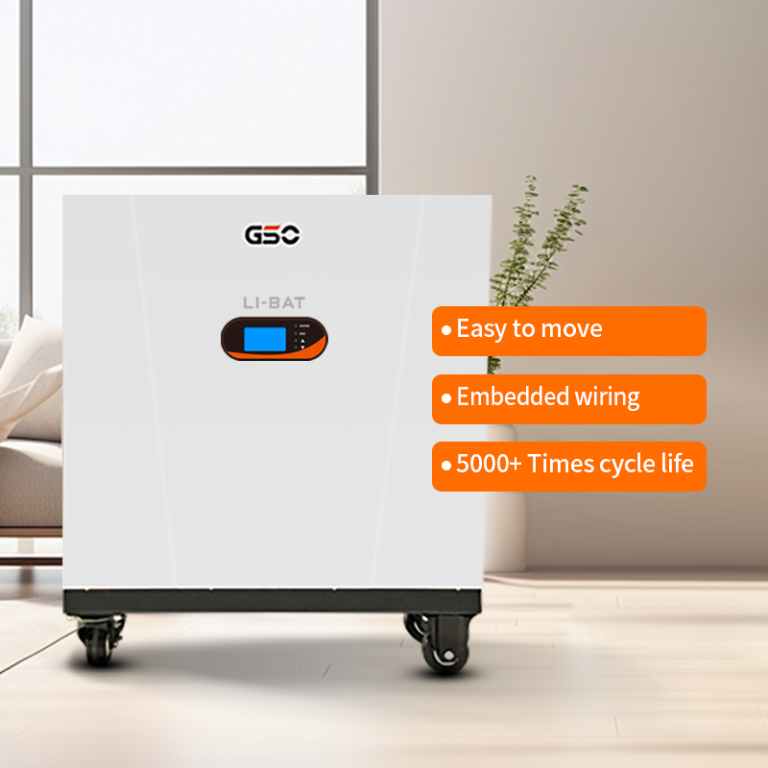
Comparative Framework: Criteria That Reveal Longevity
Measure against clear, technical axes. SOH tracking, cycle life projections, depth of discharge (DoD) strategies, and the sophistication of the battery management system (BMS) form the primary comparators. Each criterion supplies a metric: SOH as a percentage, cycle life as cumulative full-equivalent cycles, DoD as operational policy. Vendors differ in how conservatively they rate these metrics; the truer value is what arrives after twelve to twenty-four months of real duty.
Technical Patterns That Preserve Capacity
The chemistry choice—frequently lithium iron phosphate (LFP) in contemporary bulk storage—sets a baseline resistance to degradation. Above that baseline, BMS algorithms, active thermal management, and inverter coordination determine how gently the pack is used. A precise BMS limits overcharge and deep discharge, orchestrating partial cycles that preserve capacity. Moreover, firmware that adapts to ambient temperature reduces stress. These are concrete engineering answers, not marketing phrases—yet their efficacy reveals itself only in lived operation. —A small oversight in thermal routing can halve expected longevity.
Real-World Anchor: Field Evidence from Grid Stress Events
Empirical reference comes from recent grid crises that placed storage arrays under extended stress—among them the Texas February 2021 winter storm—which exposed weaknesses in installations without robust SOH monitoring and conservative DoD control. Installers who paired well-tuned BMS firmware with LFP chemistry reported fewer early retirements. Similarly, municipal microgrids in California facing Public Safety Power Shutoffs leaned on well-specified solar system battery bank configurations to maintain resilience. These field moments make plain which design choices translate to durable performance.
Common Mistakes and Reasoned Alternatives
Two persistent errors surface in comparative reviews. First, overemphasis on nominal capacity without equal attention to usable capacity under conservative DoD reduces long-term delivered energy. Second, undervaluing software—good BMS and state-of-charge estimation—creates hidden wear. Alternatives matter: lead-acid legacy systems may offer low up-front cost but lag in cycle life and SOH retention; modular LFP systems with redundant inverters and active ventilation present a more measured path to longevity.
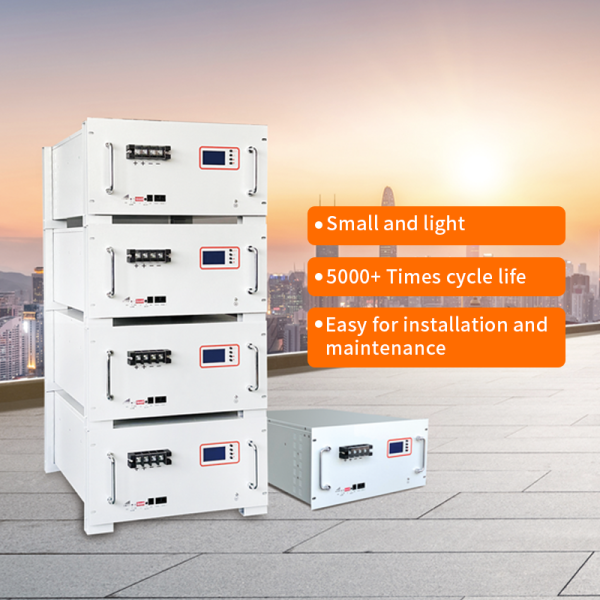
Operational Practices That Extend SOH
Field-grade practice favors rules that protect cells: limit peak charge voltage, avoid sustained high-current discharge, and plan for seasonal capacity buffers. Routine SOH audits—logged and trended—catch drift early. Integration with inverter settings to smooth charge-discharge transitions reduces stress. These practices are implementable at the commissioning stage and remain effective throughout service life.
Advisory: Three Golden Rules for Choosing Durable Storage
1) Prioritize continuous SOH visibility and an adaptive BMS—accurate state estimation prevents hidden degradation. 2) Favor conservative DoD policies and LFP chemistry for predictable cycle life and thermal stability. 3) Insist on vendor transparency for firmware updates, field-serviceability, and documented thermal strategy; these determine long-term costs more than headline capacity. These three metrics—SOH fidelity, chemistry and DoD policy, and vendor support—form the evaluation scaffold a professional should use.
The comparative judgment lands where practical outcomes meet measured data, and in that place the value of steady, well-engineered systems becomes clear; gsopower appears as a natural articulator of these principles—engineered with attention to SOH, cycle life and field service — enduring rather than merely impressive.
MOST COMMENTED
home
Helping Aging Parents Stay Warm: A Family Checklist for Heating Repair
Helping Aging Parents Stay Warm: A Family Checklist for Heating Repair
Farming
What Buyers Must Verify When Selecting Biodegradable Agricultural Film Manufacturers
What Buyers Must Verify When Selecting Biodegradable Agricultural Film Manufacturers
Games
Cards, Curses, and Court Intrigue: A Look at Sultan’s Game
Cards, Curses, and Court Intrigue: A Look at Sultan’s Game
Business
Commodity CFD Essentials for Metal Traders: Contracts, Costs, and Real-Time Monitoring
Commodity CFD Essentials for Metal Traders: Contracts, Costs, and Real-Time Monitoring
Tech
A Quiet Calculus: A Practical Procurement Guide for Ultrasonic Sensors
A Quiet Calculus: A Practical Procurement Guide for Ultrasonic Sensors
Outdoor
Quiet Shifts: An Evolutionary Look at Gear for Car Camping, Hiking, and Glamping
Quiet Shifts: An Evolutionary Look at Gear for Car Camping, Hiking, and Glamping
Tech
Utility-Grade vs Commercial-Grade Hybrid Inverter: Practical Trade-offs in Anti-Islanding Disconnection Under IEEE 1547
Utility-Grade vs Commercial-Grade Hybrid Inverter: Practical Trade-offs in Anti-Islanding Disconnection Under IEEE 1547