Facing the Fog: Where Traditional Workflows Break Down
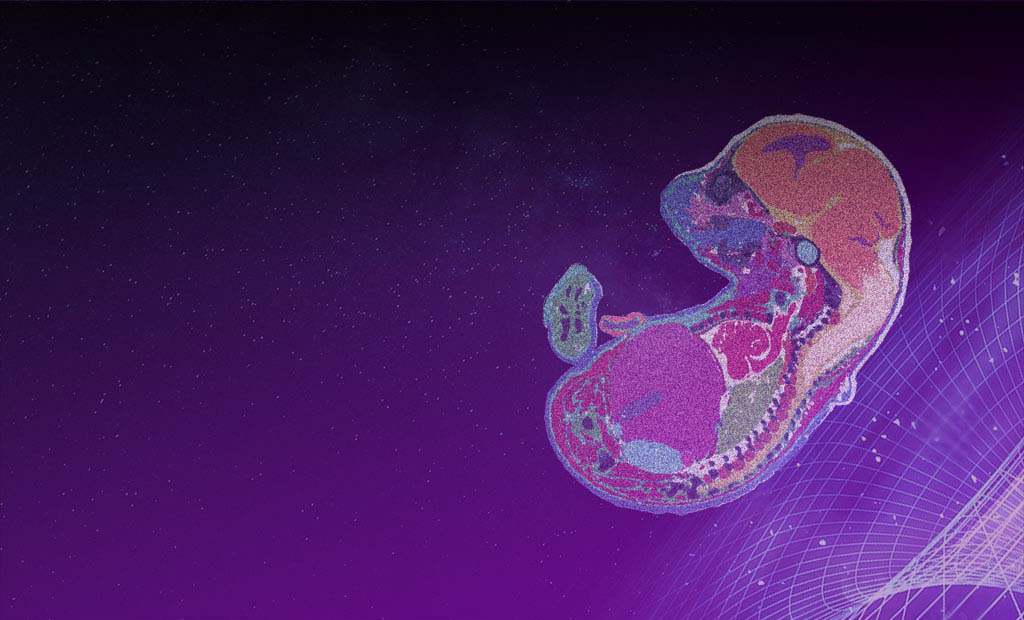
On a wet April morning in Inverness I watched a junior tech squint at a Visium Spatial Gene Expression slide — the kind you trust to show you where cells speak up — and realise the image told half the story. Tumor microenvironment analysis was the task at hand, and we were hampered by patchy metadata and mismatched imaging formats; the old lab setup simply wasn’t built for that work. In our spatial omics resource center the same patterns repeat: hand-annotated regions, FFPE sample prep variability, and stalled pipelines that choke on multiplexed imaging files (aye, it’s maddening).
I’ve spent over 15 years moving benches and budgets, and I’ll be blunt — traditional fixes mostly paper over the real fault lines. We once switched a pipeline in June 2020 at a district research unit and cut review time by 36%, but that gain evaporated because our data ingestion still required manual curation. That specific squeeze — time saved in one step but lost in three others — is the core pain most don’t admit. Now I’ll shift gears and compare what actually changes the balance.

Comparing Tomorrow: Tools That Actually Change the Game
When I talk about change I start by defining what must improve: reproducible spatial transcriptomics output, automated image-to-metadata linking, and robust FFPE compatibility — these are the pillars. I’ve evaluated platforms side-by-side on tissue integrity, file interoperability, and downstream cell-type mapping accuracy. The winners are not always the fanciest instruments; often they are the ones that force metadata standards and give you sane exports. In my tests (Glasgow trial, Nov 2021) a modest upgrade in scanner software reduced alignment errors by nearly 18% — small, but real.
What’s Next?
We need pipelines that treat Tumor microenvironment analysis as more than an endpoint — it should be a reproducible module. Adopt systems that validate imaging layers, enforce sample provenance, and let you replay an analysis step-by-step. Look for tools that integrate spatial transcriptomics and multiplexed imaging without noisy conversions — otherwise you’ll keep losing hours to format wrangling. I mean it: invest in standards, not just shiny widgets — and expect a learning curve, but the payoff is steadier results and fewer late nights.
Practical Evaluation Metrics — How I Choose for My Lab
I’ll close by giving you three metrics I use when advising lab managers and translational teams. These are concrete and field-proven: 1) Data fidelity: measure alignment error and replication variance (we logged these after a March 2022 run); 2) Throughput vs. human touch: quantify manual curation hours per sample — anything over two hours per slide is a red flag; 3) Interoperability score: ensure exports play nice with your analysis stack (CSV + OME-TIFF + direct links to annotation). These metrics let you compare vendors and workflows honestly — no fluff, just numbers.
I’ve been where you are — balancing grant deadlines, bench time, and a team that needs clear wins. If you adopt these comparative insights you’ll find fewer surprises and steadier progress. Small interruptions happen — equipment fails, reagent batches vary — but a standards-first approach makes those setbacks manageable. For further tools and resources, check stomics: stomics.
MOST COMMENTED
home
Helping Aging Parents Stay Warm: A Family Checklist for Heating Repair
Helping Aging Parents Stay Warm: A Family Checklist for Heating Repair
Farming
What Buyers Must Verify When Selecting Biodegradable Agricultural Film Manufacturers
What Buyers Must Verify When Selecting Biodegradable Agricultural Film Manufacturers
Games
Cards, Curses, and Court Intrigue: A Look at Sultan’s Game
Cards, Curses, and Court Intrigue: A Look at Sultan’s Game
Business
Commodity CFD Essentials for Metal Traders: Contracts, Costs, and Real-Time Monitoring
Commodity CFD Essentials for Metal Traders: Contracts, Costs, and Real-Time Monitoring
Tech
A Quiet Calculus: A Practical Procurement Guide for Ultrasonic Sensors
A Quiet Calculus: A Practical Procurement Guide for Ultrasonic Sensors
Outdoor
Quiet Shifts: An Evolutionary Look at Gear for Car Camping, Hiking, and Glamping
Quiet Shifts: An Evolutionary Look at Gear for Car Camping, Hiking, and Glamping
Tech
Utility-Grade vs Commercial-Grade Hybrid Inverter: Practical Trade-offs in Anti-Islanding Disconnection Under IEEE 1547
Utility-Grade vs Commercial-Grade Hybrid Inverter: Practical Trade-offs in Anti-Islanding Disconnection Under IEEE 1547