Introduction: A question that matters to margins and safety
Have you ever wondered why equipment that’s supposed to protect staff sometimes becomes the weakest link in operations?
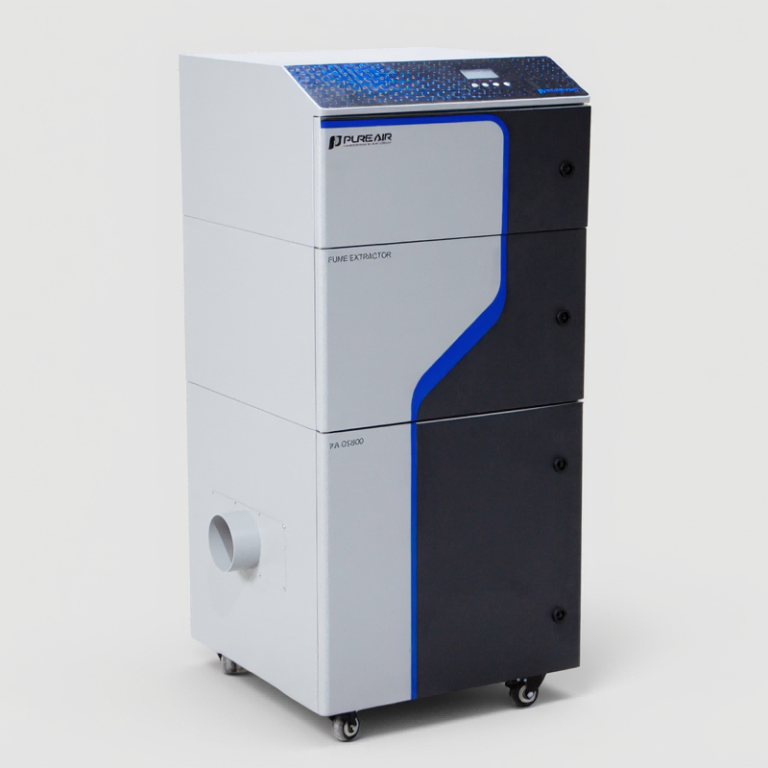
When I walk a shop floor, the choice of a laser marking fume extractor often turns into a cost-versus-compliance tug-of-war: exposure limits, permit-to-work numbers, and maintenance budgets all collide (and yes — I’ve seen the spreadsheets). Recent sampling data shows particulate counts near engraving bays can exceed recommended workplace exposure limits by several times within minutes, so the machine selection matters financially and legally. Given that context, what real factors should drive procurement decisions for extraction and filtration?
I’ll outline practical, budget-aware perspectives that blend engineering basics with business metrics — short, clear, and actionable — then move into where traditional solutions fall short. Let’s get into the root issues and what to compare next.
Part 2 — Technical diagnosis: Why standard extraction often fails
industrial air purifier for dust is often offered as the fix-all, but in practice I find several recurring technical flaws that procurement teams miss within the first month of deployment. First, systems specified only by flow (CFM) without matching capture velocity at the source underperform. Second, filter selection is frequently generic — a HEPA label alone doesn’t guarantee performance against ultrafine particles or VOCs produced by laser engraving and marking. Third, ductwork and hood design get treated as an afterthought, creating turbulence and dead zones where fumes recirculate.
Look, it’s simpler than you think: talk to your operations team about the actual process (pulse power, material types, engraving speed). You’ll often discover that a nominally “heavy-duty” extractor can’t handle peak loads because of fan impeller sizing, improper access for service, or a mismatch between activated carbon capacity and solvent load. I’ve seen shops replace filters monthly because the VOC sensor alarm was treated as an annoyance rather than a signal — that’s a design problem, not just bad luck. Two industry specifics worth flagging are ULPA vs HEPA performance at submicron ranges, and the role of VOC sensors in active purge cycles.
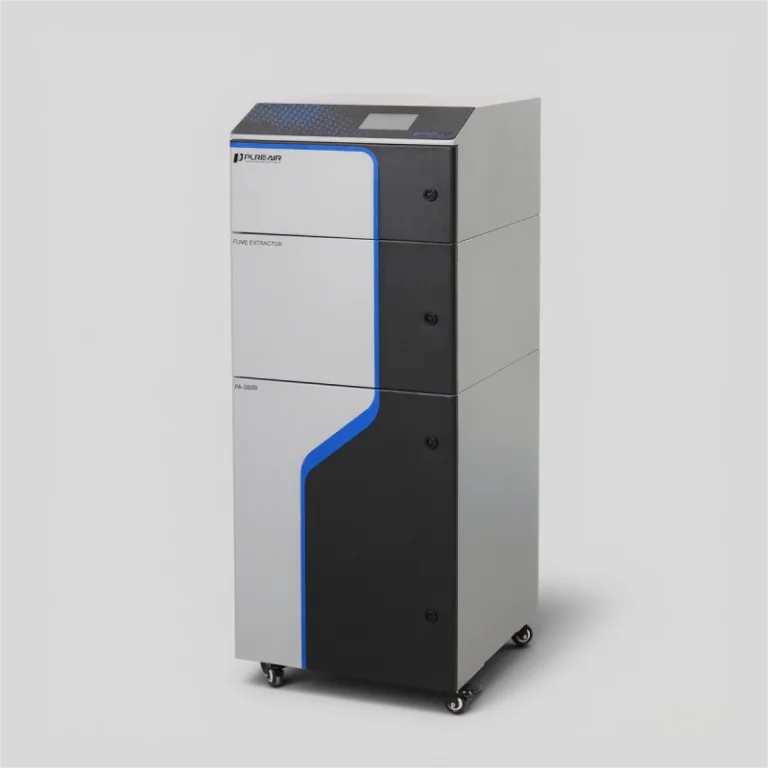
How do these flaws show up on the floor?
They show up as higher downtime, surprise compliance costs, and staff complaints. We’ve measured increased maintenance hours — and yes, that impacts OEE — so the invisible cost is real. Addressing these flaws means aligning capture hood geometry, fan curves, filter media (HEPA/ULPA plus activated carbon), and instrumentation like VOC sensors to the process profile.
Part 3 — Looking forward: New principles and metric-driven choices
What’s next? I prefer to explain new technology principles rather than chase buzzwords. Modern solutions mix targeted source capture with layered filtration: pre-separation for coarse dust, HEPA/ULPA for particulates, and modular activated carbon beds for VOCs. Smart controls tie into production systems so that runtime, differential pressure, and VOC readings feed into predictive maintenance schedules. When configured right, an industrial air purifier for dust becomes part of the process control strategy — not an afterthought. This reduces filter spend over time and lowers unplanned stops — funny how that works, right?
In practical terms I look at three areas: adaptability (can the unit be tuned as process parameters change?), measurable outcomes (do you get continuous monitoring of CFM, static pressure, and VOCs?), and lifecycle costs (service access, replacement media price, disposal). We shifted one client from a “one-size” box to a modular, sensor-driven setup and saw measurable drops in airborne particulate counts and a 20% reduction in filter-related downtime within six months. The lesson: integration beats isolation.
What to measure next
Here are three evaluation metrics I insist on when advising teams — use them as your shortlist checklist. First, capture efficiency at the source (measured in % at targeted particle sizes). Second, operational transparency (real-time CFM, differential pressure, VOC alerts). Third, total cost of ownership over three years (filters, service, energy, compliance fines). These are objective, business-relevant, and—most importantly—testable before you sign a long-term purchase order.
In closing, I recommend you balance technical specs with on-floor reality. Ask for performance tests using your materials. Require sensor access and clear maintenance pathways. And don’t forget to compare lifecycle costs, not just sticker price. If you want a reliable partner that designs systems around the process — and not the other way around — check out PURE-AIR. We’ve seen the problems, we’ve fixed them, and we’ll help you ask the right questions.
MOST COMMENTED
home
Helping Aging Parents Stay Warm: A Family Checklist for Heating Repair
Helping Aging Parents Stay Warm: A Family Checklist for Heating Repair
Farming
What Buyers Must Verify When Selecting Biodegradable Agricultural Film Manufacturers
What Buyers Must Verify When Selecting Biodegradable Agricultural Film Manufacturers
Games
Cards, Curses, and Court Intrigue: A Look at Sultan’s Game
Cards, Curses, and Court Intrigue: A Look at Sultan’s Game
Business
Commodity CFD Essentials for Metal Traders: Contracts, Costs, and Real-Time Monitoring
Commodity CFD Essentials for Metal Traders: Contracts, Costs, and Real-Time Monitoring
Tech
A Quiet Calculus: A Practical Procurement Guide for Ultrasonic Sensors
A Quiet Calculus: A Practical Procurement Guide for Ultrasonic Sensors
Outdoor
Quiet Shifts: An Evolutionary Look at Gear for Car Camping, Hiking, and Glamping
Quiet Shifts: An Evolutionary Look at Gear for Car Camping, Hiking, and Glamping
Tech
Utility-Grade vs Commercial-Grade Hybrid Inverter: Practical Trade-offs in Anti-Islanding Disconnection Under IEEE 1547
Utility-Grade vs Commercial-Grade Hybrid Inverter: Practical Trade-offs in Anti-Islanding Disconnection Under IEEE 1547